
English| EUR
Suggested for you
More currencies
Choose a language
The Amalfi Coast stretches 50 kilometers along Italy's Sorrentine Peninsula, linking thirteen clifftop towns through a single narrow road. Successful trips balance seasonal weather patterns, inter-town transport constraints, and accommodation location against the itinerary you want to execute. This guide structures the core planning decisions that determine whether your visit flows smoothly or burns hours in traffic and logistical friction.
Quick answer
Planning a trip to the Amalfi Coast requires selecting April-May or September-October for moderate weather and smaller crowds, booking accommodation in a central base town like Positano or Amalfi rather than moving between hotels, and pre-arranging ferry tickets or private transfers since the coastal road (SS163) becomes heavily congested during midday hours throughout the warmer months.
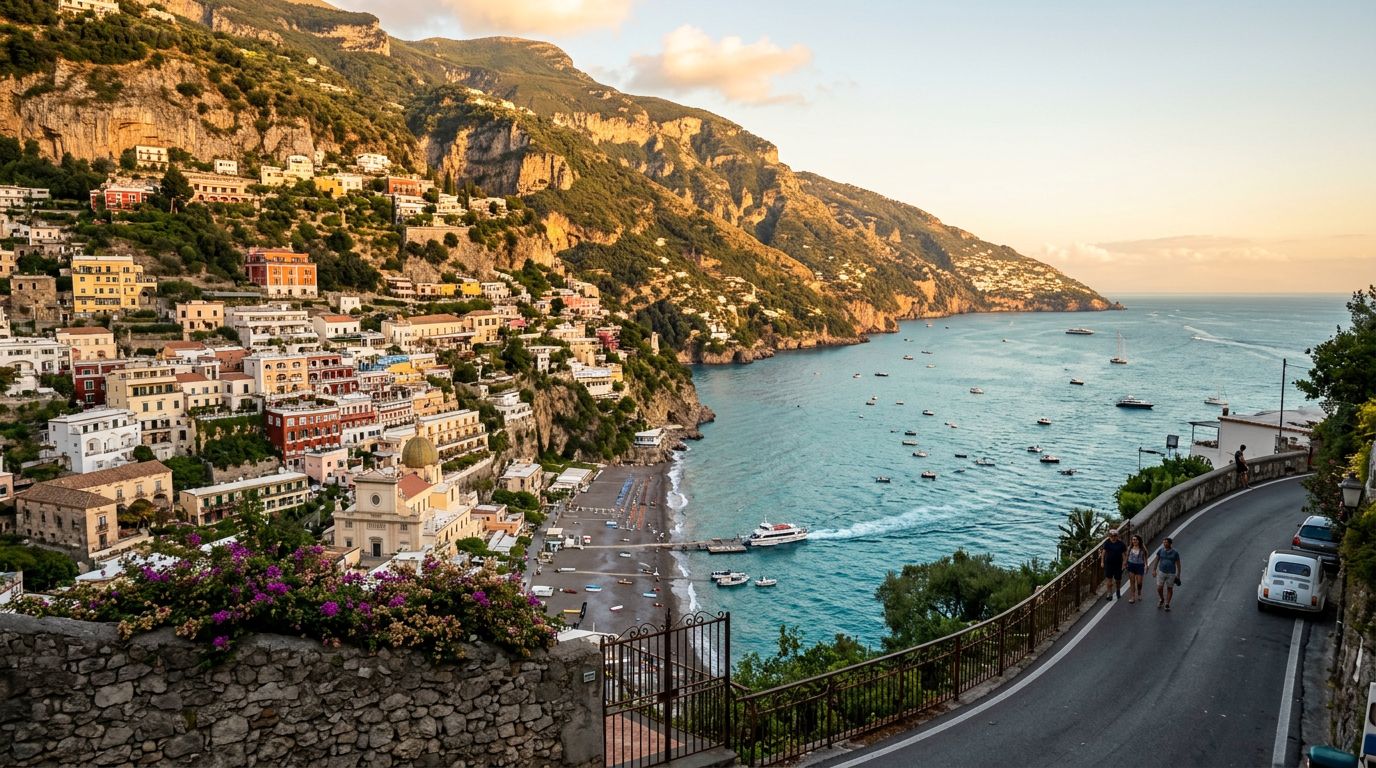
The Costiera Amalfitana receives over five million visitors annually, but its medieval infrastructure was built for fishing villages, not tourism volume. The thirteen towns cling to cliffs between Positano and Vietri sul Mare, connected by the SS163 highway—a two-lane road carved into rock faces in the 1850s. Modern tour buses, delivery trucks, and rental cars squeeze past each other on hairpin curves with no shoulder and sheer drops to the Tyrrhenian Sea below. Summer traffic frequently stalls for thirty-minute intervals. Early morning departures before 09:00 and ferry routes between major towns bypass the worst congestion. How to plan a trip to the Amalfi coast centers on three structural choices: duration, base location, and transport mode. Most visitors allocate three to five days. Shorter stays concentrate on Positano, Amalfi, and Ravello. Week-long itineraries add Praiano, Atrani, and day excursions to Capri or the Path of the Gods hiking trail. Choosing one or two base towns rather than hotel-hopping eliminates daily packing and checkout procedures. Positano offers the widest selection of restaurants and evening activity. Amalfi provides central access and ferry connections. Ravello sits 365 meters above sea level with reduced coastal road dependency. Transport dictates your daily radius. Private drivers cost €200-300 for half-day excursions but eliminate parking anxiety and road stress. Public SITA buses run hourly between towns for €2-4 per segment; routes fill quickly, and luggage space is minimal. Ferries operate April through October, connecting Positano, Amalfi, Salerno, and surrounding ports—schedules depend on sea conditions. Rental cars provide autonomy but require experience with narrow European roads and acceptance that parking near town centers is scarce or prohibited. Accommodation books four to six months ahead for May-September. Coastal properties command premium rates; inland agriturismos in the Lattari Mountains offer lower prices and complimentary parking. Verify whether your lodging includes breakfast and check cancellation terms, as weather disruptions occasionally close roads or cancel ferries. Reserve dinner tables at Michelin-recognized restaurants weeks in advance during peak season. The region's designation as a UNESCO World Heritage Site since 1997 brings conservation restrictions that limit new construction, keeping room inventory constrained relative to demand.
“The thirteen towns cling to cliffs between Positano and Vietri sul Mare, connected by a two-lane road carved into rock faces in the 1850s—modern tour buses and rental cars squeeze past each other on hairpin curves with no shoulder and sheer drops to the sea below.”
The optimal time to explore the Amalfi Coast is during the shoulder seasons of spring and autumn, while the ideal daily arrival window is 06:00–09:00. Arriving within this timeframe helps travelers avoid heavy traffic on the narrow coastal roads and bypass peak midday crowds.
Mild temperatures of 15°C to 22°C
Spring offers comfortable hiking conditions and blooming landscapes.
Warm temperatures of 18°C to 25°C
The sea remains warm, providing favorable conditions for coastal exploration.
—
Early arrival between 06:00–09:00 ensures easier navigation and access to popular paths before peak traffic.
Verdict: The best experience is achieved during the shoulder months of April, May, September, or October, specifically by planning arrivals between 06:00–09:00 on weekdays.
The Amalfi Coast is located along the southern edge of the Sorrentine Peninsula in the Campania region of Italy. Most travelers reach the region by combining train travel to Salerno or Sorrento with local bus or ferry connections.
Trenitalia Frecciarossa to Salerno station
SITA Sud bus from Salerno or Sorrento
Travelmar ferry from Salerno or Naples
SS163 Amalfitana coastal road
Driving the SS163 Amalfitana is challenging due to narrow, winding roads and limited parking; public transit or ferries are the standard alternatives. Aim to reach the region between 06:00–09:00 to avoid heavy traffic on coastal routes and peak crowds.
The Amalfi Coast is a public region comprised of multiple independent towns rather than a single gated attraction. Consequently, there are no entrance fees for accessing the area itself.
Verdict: You pay 0 EUR to enter the Amalfi Coast, though individual travel, dining, and activity choices will influence your total expenditure.
This sequence suits travelers spending 3–5 days exploring the coast's main towns. It follows the coastline from west to east, minimizing backtracking and allowing flexible overnight stops.
Start in Positano to acclimate and explore its steep streets, beaches, and boutiques. Spend the afternoon walking between Spiaggia Grande and Fornillo Beach, roughly 2–3 hours total.
Head east to Praiano for quieter lanes and the Marina di Praia cove, then continue to Furore to see the fjord and painted houses. Allow 4–5 hours including photo stops and a swim.
Visit Amalfi's cathedral, Piazza del Duomo, and the Paper Museum in the Valle dei Mulini. The compact center takes 3–4 hours; reserve energy for an optional walk up the valley trail.
Walk 10 minutes east to Atrani, the coast's smallest town, then drive or bus uphill to Ravello for Villa Rufolo and Villa Cimbrone gardens. Ravello requires 3–4 hours; return to your base by late afternoon.
Tour the eastern towns—Minori for pastries, Maiori for its long beach, and Vietri sul Mare for ceramic workshops. Each stop takes 1–2 hours; finish by early evening.
Prepare these items in advance to navigate the coastal terrain and secure lodging during peak season.
Everything you need to know about how to plan a trip to the amalfi coast
To organize your logistics, focus on your primary travel dates and accommodation bookings well in advance. Consider the local geography and prioritize which towns you wish to explore based on their unique character.
Creating a travel itinerary for this coastline involves mapping out town connections by ferry or bus. Exploring the regional landmarks requires coordination between public transit schedules and your desired activity pace.
You should aim for the best arrival window between 06:00 and 09:00. Arriving early is the most practical strategy to bypass heavy traffic on narrow coastal roads and avoid peak midday crowds.
There is no cost for regional access as the entry fee is 0 EUR. Since the Amalfi Coast is a public region consisting of multiple towns, you will only pay for specific services like transport or local tours.
Utilizing ferries or local bus services is the standard approach for moving between towns. Reviewing transit timetables ahead of your arrival will streamline your movement along the cliffs.
Many coastal paths and pedestrian-friendly streets are accessible for families. Always verify the specific trail difficulty and elevation gain before beginning your excursion with younger travelers.
A frequent error is underestimating the time required for travel between locations on the winding coastal roads. Allow for extra transit time to enjoy the Mediterranean views without feeling rushed during your stay.