
English| EUR
Suggested for you
More currencies
Choose a language
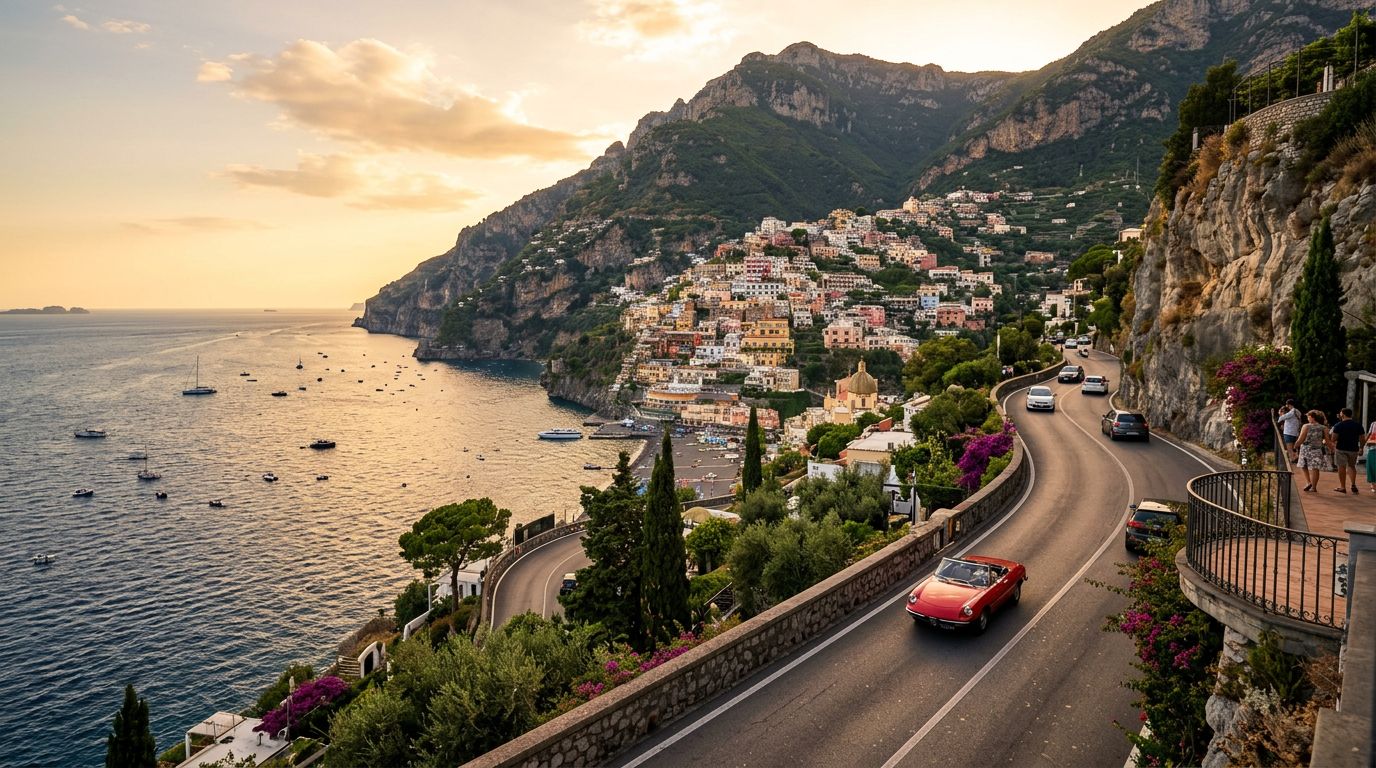
The Amalfi Coast stretches 50 kilometers along the Sorrentine Peninsula, linking 13 towns between Positano and Vietri sul Mare. Your ideal stay depends on whether you plan to hike the high trails, explore inland villages, or stay beach-focused. This guide breaks down trip lengths by travel style and shows you how to structure your days.
Quick answer
Most visitors need 3 to 5 days on the Amalfi Coast to experience the main towns, complete at least one coastal hike, and enjoy the beaches without feeling rushed. Three days covers Positano, Amalfi, and Ravello with brief stops. Five days allows time for the Path of the Gods trail, boat trips to hidden coves, and slower exploration of hill towns like Scala or Atrani. Weekend travelers can see highlights in two days, though ferry schedules and coastal road traffic will limit flexibility.
The Amalfi Coast operates on two incompatible schedules: the narrow SS163 coastal road moves at 30 kilometers per hour during summer, while ferries between towns run only April through October. How many days do you need in Amalfi Coast depends less on the number of towns you want to visit and more on how you plan to move between them. Positano to Amalfi takes 30 minutes by boat but up to 90 minutes by bus during peak season, and that gap shapes every itinerary. Three days gives you one full day in each of the anchor towns—Positano, Amalfi, Ravello—with mornings reserved for movement and afternoons for wandering. You will have time for one major hike if you start at dawn, or one boat excursion if seas are calm. Five days opens space for the Path of the Gods trail above Positano, a visit to the lemon terraces in Furore, and an overnight in Praiano or Atrani where evening crowds thin out. That extra time also absorbs weather delays: the coastal road closes during storms, and ferries cancel in rough seas. The region's 400 staircases connect clifftop roads to beach-level villages, and most trails involve 500 to 1,000 meters of elevation change. Physical pace matters as much as sightseeing ambition. Visitors planning multiple hikes or carrying mobility limitations should add a day to standard recommendations. The best arrival window falls between 08:00 and 10:00, before tour buses dominate the SS163 and parking fills in Positano and Amalfi. Entrance to public roads, beaches, and most town centers costs nothing, though private beach clubs charge 15 to 30 EUR per day for lounger access. Figuring out the right stay length means reconciling three variables: the towns you want to see, the activities you want to complete, and the transport method you will rely on. Car drivers gain flexibility but lose time to parking searches. Ferry users move faster but depend on seasonal schedules. Bus riders pay the least but face the longest travel windows. Two-day trips work for visitors treating the coast as a side excursion from Naples or Sorrento, but anything shorter turns into a photo stop rather than an immersion.
“The coastal road moves at 30 kilometers per hour during summer, while ferries between towns run only April through October.”
Most visitors need 3–7 days to experience the Amalfi Coast properly, depending on whether you want a highlights tour or a deeper exploration of the towns, hiking trails, and island day trips.
Settle into your base town, stroll Positano's steep lanes and Marina Grande beach. Allow time for coastal road transfers if staying elsewhere.
Visit Amalfi's cathedral square, the Arsenale museum, and walk to neighboring Atrani. Budget 4–5 hours including lunch.
Take the bus up to Ravello, tour Villa Rufolo and Villa Cimbrone's terrace gardens. Return by late afternoon; the climb takes 25 minutes by road.
Hike the Sentiero degli Dei from Bomerano to Nocelle (3–4 hours), then descend to Positano. Start early to avoid midday heat.
Ferry to Capri from Positano or Amalfi, visit the Blue Grotto and Anacapri. Ferries run frequently; book the grotto boat on arrival.
Explore quieter Praiano, walk down to the Furore fjord beach, and catch sunset from a cliffside terrace. Less crowded than the main towns.
Visit Salerno's old town and seafront, or drive south to Paestum's Greek temples. Both make a strong cultural finish before departure.
The most effective way to manage your time on the Amalfi Coast is to visit during the shoulder seasons of May, June, September, and October. Arriving within the best arrival window of 08:00–10:00 is essential to navigate the region's narrow roads and popular hiking paths before peak midday traffic.
Mild temperatures (18°C–25°C)
Ideal for hiking and exploring towns without the heat of summer.
Hot temperatures (28°C–32°C)
Expect heavy traffic and limited space on public paths.
Cool temperatures (10°C–15°C)
Some services are limited, but the region is quiet and accessible.
—
Early arrivals provide reliable access to coastal routes and attractions before crowds peak.
Verdict: The best time to visit is during the shoulder months of May or October, arriving daily between 08:00–10:00 to ensure manageable travel times.
The Amalfi Coast is located in the Province of Salerno, Campania, Italy, and is most efficiently accessed via hubs in Naples or Salerno. Transit times vary significantly by mode, which dictates the time available for your actual itinerary.
Frecciarossa/Italo to Salerno Station
SITA Sud from Salerno to Amalfi
Travelmar ferry from Salerno to Amalfi
SS163 Amalfitana road
To minimize delays on the coastal road, plan your arrival for the 08:00–10:00 window. This prevents overlap with peak traffic and allows more time for local sightseeing.
Daily expenditures vary based on accommodation choices and dining preferences. Managing costs effectively requires balancing local transport options with dining choices during your stay.
How to spend less
Verdict: A daily budget typically ranges from 100 EUR for budget travelers to over 250 EUR for a comfortable experience, excluding accommodation.
Preparation timing depends on your planned duration—longer stays need more advance bookings for peak-season accommodation and popular hiking tours.
Everything you need to know about how many days do you need in amalfi coast
Most travelers find that three to five days is sufficient to explore the primary towns and coastal trails. Extending your stay allows for a more relaxed pace and opportunities to visit hidden coves or take boat trips to nearby islands. Choosing the right duration ensures you do not feel rushed while navigating the narrow cliffside roads. Your visit can be customized to match your pace if you are curious about how many days do you need in amalfi coast to see the highlights.